Here's the thing about global buyers – they don't just fall for flashy product pages and quick promises. What they really need is a supplier who gets the nitty-gritty: quality standards, clear communication, proper documentation, and handling delivery risks without breaking a sweat. That's where Water House steps in – a practical partner for anyone hunting for dependable water-related products and professional service. But don't take their word for it. Judge them on the details: do they give you clear specs? Are they quick to respond? Do they actually follow through on what they say? That's where the real value shows.
You know, the little things really can make or break a deal. Before a buyer commits to an order, they might need to dig into stuff like material specs, packaging dimensions, test results, or shipping terms. That's where Water House can step in—we make it easier to browse through product info and double-check decisions without the headache. Plus, having samples, inspection checkpoints, and written confirmations can save everyone from those annoying mix-ups. So yeah, those tiny details? They matter more than you'd think.
You know, checking out the Water House & Aqua House side by side can actually give you a clearer picture of what each brand really excels at. Like, one might be the go-to if you're after heavy customization, while the other could have a wider range to pick from. But honestly, don't just rely on the name—you gotta dig deeper. No company is perfect, and the photos they show you? They can hide a lot of flaws. So take your time, weigh your options, and don't get swayed by just a pretty picture. You know, before you even think about sending money or kicking off production, you've got to ask the real questions—like, the direct ones. And don't skip the paperwork either; actually sit down and read those documents. Make sure you're on the same page about every little thing.
This whole approach isn't just about flashy marketing talk—it's about real-world experience. If you've been around international trade, you get that. It's about respecting how things are done properly and keeping the practical side in mind. So when a company like Water House comes along, they might stand out because they seem to know their product and offer a more organized way to buy. That's appealing to global buyers, no doubt. But here's the kicker: you can't fully trust them yet. Trust has to be proven over time, and that's exactly where it starts to build.

Water House & Aqua House describes a centralized water solution hub for international buyers. It combines sourcing, purification, testing, storage, and delivery coordination. Instead of managing separate suppliers, buyers can review one structured supply process. The offer may include treated drinking water, filtration equipment, refill systems, and technical support. Clear specifications matter.
2.2 billion people lacked safely managed drinking water in 2022. This gap increases demand for reliable treatment and distribution systems. A professional water house should provide laboratory test results, source documentation, filtration details, and batch traceability. Buyers should also confirm local certifications before importing equipment or water products. Paperwork protects trust. The WHO and UNICEF Joint Monitoring Programme’s 2024 update reported that
Practical experience shows that small details often decide performance. Storage tanks need clean interiors and controlled temperatures. Delivery routes need backup plans during heat, storms, or port delays. The model is not flawless. Testing schedules can vary, and sustainability claims may need stronger evidence. The UN World Water Development Report 2024 also links water stress with rising competition among users. For global buyers, a capable water house offers coordination, technical guidance, and measurable quality controls, but independent verification remains necessary.
Water House serves international buyers through practical guidance, documented quality controls, and responsive communication.
The need is substantial: 2.2 billion people lacked safely managed drinking water in 2022, according to the WHO/UNICEF Joint Monitoring Programme. This figure makes product reliability more than a purchasing preference. It becomes a daily operational concern.
International customers often need more than a product page. Water House can provide technical specifications, test results, installation guidance, and export documentation in clear English.
Buyers can compare flow rates, filtration levels, materials, and maintenance intervals before ordering. Local regulations still differ, so compliance checks should remain the buyer’s responsibility.
That point is easy to overlook. The UNESCO World Water Development Report 2024 notes that agriculture represents roughly 70% of global freshwater withdrawals.
Efficient water use therefore matters across homes, farms, and commercial facilities.
Service continues after shipment. Water House supports remote troubleshooting, spare-part planning, and practical maintenance instructions.
Photos of connection points and short inspection videos can reduce misunderstandings across time zones. Packaging also matters; sealed fittings, moisture protection, and readable labels help products arrive ready for use.
Not every problem is solved remotely. Complex installations may require qualified local technicians and independent testing. That limitation deserves honest discussion, especially when buyers are comparing suppliers from different markets.
Global buyers need more than attractive packaging. They need clear evidence that every product is safe, consistent, and legally marketable. Experienced quality teams review raw materials, production conditions, and finished goods at defined checkpoints. Each batch should carry a traceable code, production date, and inspection record.
Safety begins with controlled sourcing and hygienic handling. Samples can be tested for chemical residues, microbiological risks, and packaging integrity through qualified laboratories. Temperature logs, sealed cartons, and moisture-resistant materials also matter during international transport. Small details protect the final product.
Compliance requires careful documentation. Technical specifications, test reports, safety data, and export documents should match the actual shipment. Requirements may differ between markets, so regulatory checks must be completed before dispatch. Recognized quality systems support consistency, but certificates alone are not enough. Practical inspection still matters.
No process is perfect. A missing label or unclear translation can delay customs clearance. That risk deserves honest review. Quality teams should investigate deviations, record corrective actions, and improve procedures instead of hiding small failures. Buyers gain confidence when suppliers provide timely answers, verifiable records, and realistic delivery information. Reliability is built through repeated evidence, not promises.
For global buyers, reliable water product sourcing starts with clear specifications. Experienced teams review material grades, dimensions, flow rates, finishes, and packaging requirements before requesting quotes. This reduces costly misunderstandings between factories, distributors, and purchasing departments.
A practical sourcing process includes supplier checks, sample reviews, and documented quality standards. Buyers can request product samples before placing larger orders. They may also compare several materials, colors, fittings, or surface treatments. Customization can cover logos, carton printing, instruction sheets, and protective inserts. Small details matter. A scratched surface or unclear label can delay a shipment.
Order flexibility is another important consideration. Depending on production capacity, buyers may choose trial quantities, mixed models, repeat orders, or larger container shipments. Clear minimum order quantities and lead times make planning easier. Reliable suppliers should provide updated production schedules and inspection records. Independent inspections can add confidence before shipment.
Not every first sample is perfect. That is normal, and it deserves honest review. A useful partner responds to measurements, photographs, and test results instead of making vague promises. Buyers should also confirm payment terms, packaging strength, export documents, and applicable product requirements in their destination markets. I have found that written confirmation prevents more problems than urgent phone calls. The process may feel slower at the beginning, but it often protects quality, budget, and delivery expectations.
Global buyers need more than a low freight quote. Around 80% of world merchandise trade by volume moves by sea, according to UNCTAD’s Review of Maritime Transport. That scale makes route planning, port selection, and documentation essential. Water Playground Water House can support this process with shipment tracking, export paperwork checks, and coordinated ocean or air freight options.
Details matter. A pallet leaving a coastal warehouse may pass through several hands before reaching a buyer’s door. Our logistics planning considers cargo dimensions, delivery windows, customs requirements, and seasonal port congestion. The World Bank’s Logistics Performance Index 2023 evaluates customs, infrastructure, tracking, and timeliness. These measures reflect what buyers experience: a delayed scan can create a delayed decision.
Small errors remain possible. A carton label may need correction. A vessel schedule may change overnight. We review milestones and communicate exceptions instead of hiding them. Clear updates are especially useful when buyers manage different time zones, currencies, and warehouse systems. Better logistics is not only faster shipping. It is practical control, documented checks, and fewer surprises.
International maritime trade has continued to expand over recent years, highlighting the importance of reliable ocean freight, port coordination, and end-to-end logistics planning for global buyers. The figures represent global maritime trade volumes in billion tonnes.
Source: UNCTAD, Review of Maritime Transport 2024.
Global buyers choose a water house for more than equipment and attractive designs. Reliable customer support matters from the first inquiry to daily operation. A professional supplier should explain specifications, installation needs, safety features, and maintenance schedules in clear language. For a Small Water House Water Park, this guidance can prevent expensive mistakes before construction begins.
After-sales service should include responsive communication across time zones. Buyers may need installation videos, troubleshooting instructions, replacement-part advice, and updated technical documents. A dependable team records project details and follows each issue until it is resolved. Practical experience shows that small problems, such as a loose fitting or unclear control label, can interrupt an entire operating day. Remote assistance is useful, but it cannot replace qualified local inspection. Some support plans also need clearer response times and stronger follow-up.
Tips: Ask for a written support process before payment. Confirm warranty coverage, spare-part availability, training hours, and service contacts. Keep photographs of equipment connections and maintenance records. Test communication before opening day. It reveals weaknesses early. Buyers should also review local safety requirements with certified professionals. No supplier can predict every site condition, and honest advice is more valuable than confident promises.
| Service Dimension | What Global Buyers Need | Recommended Service Standard | Value for International Projects |
|---|---|---|---|
| Pre-Sales Consultation | Clear guidance on product selection, specifications, installation conditions, and compliance requirements. | Application-based recommendations supported by drawings, technical datasheets, and written quotations. | Reduces specification errors and helps buyers compare products on performance, compatibility, and total cost. |
| Communication Channels | Reliable contact before, during, and after an international order. | Email, online meetings, telephone support, and documented communication for key decisions. | Creates a traceable project record and supports buyers across different time zones. |
| Response Time | Fast answers to quotation requests, technical questions, and order updates. | Acknowledge routine inquiries within 1 business day and identify urgent technical issues promptly. | Helps maintain procurement schedules and prevents avoidable project delays. |
| Order and Shipment Updates | Visibility into production status, inspection, packing, dispatch, and delivery documents. | Provide milestone updates, packing details, commercial documents, and shipment tracking when available. | Improves coordination with freight forwarders, customs brokers, installers, and warehouse teams. |
| Quality Documentation | Documents required for receiving inspection, installation, commissioning, and maintenance. | Product specifications, user manuals, installation instructions, inspection records, and certificates where applicable. | Supports local compliance checks and gives technicians the information needed for safe installation. |
| Installation Guidance | Practical instructions for site preparation, connections, operating conditions, and commissioning. | Remote technical guidance supported by installation drawings, checklists, and video meetings when required. | Enables local contractors to work more efficiently without requiring unnecessary overseas travel. |
| Warranty Handling | A transparent process for reporting defects and confirming warranty eligibility. | Written warranty terms, product identification requirements, troubleshooting support, and documented case handling. | Makes responsibilities, exclusions, and available remedies clear before purchase. |
| Troubleshooting Support | Structured help when equipment performance differs from expectations. | Issue classification, photographs or operating data review, corrective-action guidance, and escalation when necessary. | Shortens diagnosis time and helps distinguish installation, operating, and product-related causes. |
| Spare Parts Availability | Access to replacement components and accurate part identification. | Maintain parts lists, identify compatible components, and provide lead-time information before confirmation. | Supports planned maintenance and reduces the risk of extended operational downtime. |
| Replacement and Returns | A clear process for transit damage, incorrect items, and confirmed defects. | Case registration, evidence review, responsibility assessment, and an agreed corrective-action plan. | Provides accountability while recognizing that international freight and customs procedures vary by country. |
| Long-Term Relationship | Support beyond the initial transaction, including repeat orders and project expansion. | Keep product records, technical correspondence, and service history organized for future reference. | Improves consistency across multiple sites and simplifies future purchasing decisions. |
Service availability, warranty coverage, delivery times, and spare-parts lead times should be confirmed in the written quotation and order documentation for each project.
When evaluating Feature Style Water House as a supplier, buyers should examine evidence, not polished promises. A reliable supplier shares clear material specifications, product drawings, test reports, and quality-control procedures. These details show how products perform under pressure, heat, storage, and repeated use. Ask for recent samples. Compare them with the approved specification. Small differences can reveal weak process control.
Production experience also matters. Review factory capacity, inspection stages, packaging methods, and typical lead times. A capable supplier should explain how it handles custom dimensions, replacement parts, and quality concerns. Communication is another practical test. Replies should be accurate, timely, and easy to follow. Vague answers may create expensive delays across borders. Request references from comparable markets, where appropriate and permitted.
Global buyers should check export documentation, product labeling, shipping terms, and applicable safety requirements. Do not assume one certificate covers every destination. Verify documents independently when possible. Payment schedules and warranty conditions deserve equal attention. A low quotation can hide limited support or unstable material costs. No supplier is perfect. Even a careful review can miss problems. My own preference is a small trial order before a larger commitment, although this adds time and freight expense. That inconvenience often exposes packaging damage, inconsistent finishing, or unclear responsibilities before the relationship becomes difficult.
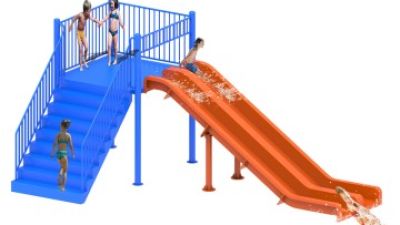
The Double Rainbow 2-Lane Water Slide is designed to turn a family pool or commercial aquatic venue into a high-energy attraction. Its side-by-side lanes allow two riders to enjoy the excitement together, encouraging friendly races and repeat use for children, teenagers, and adults. Industry demand supports this type of interactive feature: the TEA/AECOM 2023 Theme Index reported approximately 244.6 million visits to the world’s top 25 Theme Parks, highlighting the continuing appeal of experience-driven entertainment. For smaller family facilities, a compact two-lane slide can provide a strong attraction without requiring the footprint of a large-scale waterpark installation.
Model LS-115-1 occupies approximately 22 square meters and measures 624 × 360 × 298 cm, with customized sizing available for different pool layouts. Built for both residential family entertainment and commercial pool environments, the structure is intended to deliver durability, reliable performance, and low maintenance requirements. Smooth, well-designed slide surfaces support consistent riding, while regular inspections of connections, landing zones, water flow, and structural components help maintain safe operation. Operators can also improve visitor flow by using clear access routes and scheduling routine cleaning during low-demand periods. Its double-lane configuration increases capacity during busy hours, giving venues more opportunities to create engaging aquatic experiences while making efficient use of available space.
Request samples, inspection records, batch codes, production dates, and laboratory test reports. Check the actual goods, not certificates alone.
Qualified laboratories can test chemical residues, microbiological risks, and packaging integrity. Hygienic handling and controlled sourcing also matter. Small details protect users.
Each batch should include a traceable code, production date, and inspection record. Clear records make problems easier to investigate.
Use sealed cartons, moisture-resistant materials, and suitable protective inserts. Keep temperature logs when conditions may affect product quality.
Technical specifications, test reports, safety data, and export documents should describe the shipped products accurately. Market requirements can differ.
Confirm material grades, dimensions, flow rates, finishes, packaging, minimum quantities, and lead times. Written details prevent costly misunderstandings.
Many suppliers offer samples, mixed models, trial orders, carton printing, instruction sheets, and protective inserts. Confirm customization limits in writing.
Ask for installation guidance, troubleshooting steps, spare-part advice, technical documents, and response times. Keep connection photographs and maintenance records.
No. Remote assistance helps, but qualified local professionals should review site conditions and safety requirements. Some support plans need stronger follow-up.
Treat it as useful feedback, not a hidden failure. Share measurements, photographs, and test results. A better process may take longer.
Water House is a specialized supplier designed to support buyers seeking dependable water-related products and solutions for international markets. It offers a structured purchasing experience that may include product selection, technical guidance, quality checks, and flexible order arrangements. For global buyers, Water House focuses on clear communication, consistent specifications, and practical support throughout the sourcing process. Product quality, safety, and compliance are essential priorities, with attention to testing, documentation, packaging, and applicable market requirements.
Buyers can evaluate Water House by reviewing its sourcing capabilities, customization options, minimum order quantities, production timelines, and ability to manage repeat orders. Reliable international logistics, suitable packaging, accurate shipping documents, and coordination with freight partners help ensure efficient delivery across borders. Responsive customer support and after-sales service are also important for resolving questions, handling product feedback, and maintaining long-term cooperation. Overall, Water House can be assessed through its product reliability, transparency, compliance awareness, logistical performance, and commitment to customer needs.