Why Choose Water Amusement Park Equipment for Your Business?
Water attractions aren’t just seasonal treats anymore—they’re becoming carefully planned revenue centers. Grand View Research put the global Water Parks market at around USD 5.3 billion in 2023, and its report points to continued growth through 2030, helped by tourism, family entertainment, and resort investment. That’s encouraging, sure. But numbers like these don’t guarantee success. Local demand still matters—a lot.
Water Amusement Park Equipments can open up several income streams on one property. A compact splash pad, for example, might draw young families during the day. A raft slide can keep people around longer and make them want to come back. Then there are extras like cabana rentals, food service, lockers, and event packages that can add revenue on the side. The TEA and AECOM Theme Index consistently shows strong attendance at leading global attractions, but attendance alone doesn’t explain profitability. Operations, pricing, maintenance, and guest flow still decide whether you make money.
And the equipment has to fit your site—not just look impressive in a brochure. Operators should look at water consumption, pump efficiency, corrosion resistance, spare-part access, and inspection procedures. IAAPA guidance stresses risk management, staff training, and disciplined daily operations across amusement facilities. That practical experience really counts. Still, every project has weak spots. A big slide can create queues, noise, and higher maintenance costs. A beautiful design can fall flat if water quality and supervision aren’t reliable. The best investment usually mixes professional engineering, verified suppliers, realistic financial modeling, and honest post-opening reviews. Sometimes, the smaller attraction is the one that performs better.
What Is Water Amusement Park Equipment?
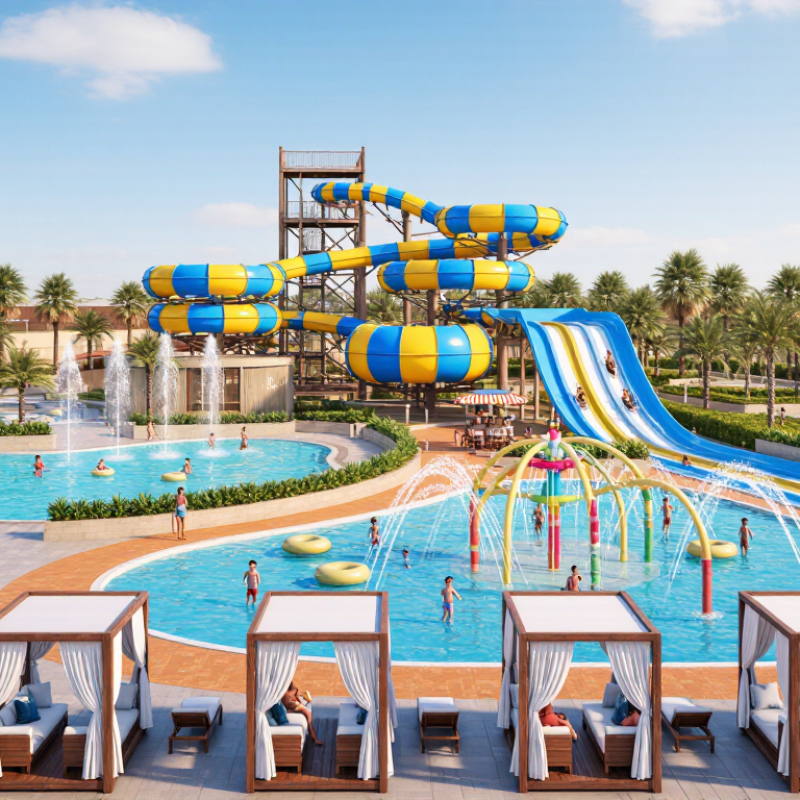
Water Amusement Equipments are engineered systems that turn water into controlled play, movement, and shared entertainment. They include body slides, raft rides, wave pools, lazy rivers, splash pads, pumps, filters, access stairs, and impact-absorbing surfaces. The equipment is not only the visible slide. Hidden pipework and water-treatment controls matter just as much.
A professional water park usually combines several systems. A shallow splash zone may use interactive spray features and non-slip flooring. A larger attraction may require calibrated pumps, emergency drainage, flotation devices, and trained attendants.
ASTM F24 standards and EN 1069 guidance are commonly referenced during design and operation. The World Health Organization reported approximately 236,000 drowning deaths globally in 2019, showing why supervision and risk control cannot be decorative features.
Market figures also explain the commercial interest. Fortune Business Insights estimated the global water park market at about USD 2.73 billion in 2023, with continued growth projected through 2032. However, reports define “water park” differently, so comparisons are not perfectly clean. That weakness deserves attention. Equipment selection should consider available land, peak-hour capacity, local climate, maintenance skills, and water-reuse systems. A visually dramatic ride may attract visitors, yet a simple shaded play area can improve dwell time for families with younger children. Performance data, inspection records, and realistic operating costs should guide the purchase more than promotional promises.
Which Types of Equipment Can Businesses Choose?
Businesses choosing Water Park Equipments should begin with guest flow, available land, and operating capacity. Compact splash pads suit family hotels and urban sites. They need shallow water, textured surfaces, and visible drainage. Larger resorts may add body slides, tube slides, wave pools, or lazy rivers. Interactive play towers can serve several age groups, while shaded seating supports parents and older guests. The 2023 AECOM/TEA Global Attractions Attendance Report recorded about 31.5 million visits across the world’s top 20 water parks. That demand shows strong potential, but attendance alone should not determine equipment selection.
Throughput matters. A slide with impressive height may create long queues and higher inspection demands. A well-designed multi-lane racer can move guests faster within a smaller footprint. Operators should also compare filtration loads, pump energy, spare parts, lifeguard visibility, and daily cleaning access. ASTM International standards provide useful guidance for water slide and aquatic facility safety, although local requirements still need professional review. Grand View Research has estimated continued growth in the global water park market, supported by tourism and family entertainment spending. Still, projections can overstate reality. Weather, water costs, and seasonal staffing may reduce returns. One practical approach is combining a high-capacity attraction with lower-maintenance features, such as spray zones and shaded play areas. Test the layout with real walking distances. Paper plans often look easier than the finished park.
What Business Benefits Can Water Attractions Provide?
Water amusement park equipment can turn unused space into a reason for families to stay longer. In my experience, guests rarely judge an attraction alone. They notice queues, shade, changing rooms, and clean walking surfaces. A well-planned splash zone can serve toddlers, parents, and older children at different times. This broad appeal supports repeat visits and steadier daily spending. It may also improve food, locker, and retail sales. Small details matter.
Water attractions create flexible revenue opportunities beyond admission tickets. Operators can offer timed sessions, group packages, lessons, private celebrations, and seasonal events. A compact play structure may suit a hotel, while a larger slide complex can anchor a destination park.
Choosing equipment by footprint, staffing capacity, water use, and local climate helps protect cash flow. The most attractive design is not always the most profitable. That lesson is easy to ignore.
Reliable equipment can reduce disruptions when inspections, filtration, drainage, and maintenance access are designed correctly. Operators should use qualified installers and follow applicable safety standards, accessibility requirements, and water-quality procedures. Clear depth markings, trained attendants, non-slip materials, and visible emergency equipment build public confidence. Visitors remember smooth operations, but they also remember one uncomfortable delay. Regular staff feedback can reveal problems that drawings never show. Some assumptions will be wrong, so review them before expansion.
How Should Businesses Evaluate Safety and Quality?
Choosing Water Play Equipments can attract families, but safety and quality should guide every purchase decision. A colorful splash feature may look impressive, yet hidden risks often appear beneath the surface. Check whether each structure has stable foundations, rounded edges, secure fasteners, and slip-resistant platforms. Ask suppliers for test reports, material specifications, installation guidance, and maintenance records. Independent inspections add credibility, especially before opening day.
Water quality also deserves close attention. Filtration systems should match the expected visitor flow, not only the equipment size. Observe how water moves through channels, drains, and collection areas. Standing water near a play zone can create hygiene concerns and slippery surfaces. Experienced operators should review emergency shutoffs, visibility from staff stations, and access for cleaning. A small blind spot can become a serious operational weakness. It is worth admitting that attractive designs sometimes receive more attention than practical maintenance.
Tips: Walk through the site as a child, parent, and technician. Look for sharp corners, crowded paths, weak shade, and difficult cleaning points. Request a clear inspection schedule and spare-parts list. Verify that workers understand installation procedures and daily checks. Do not rely on brochures alone. Touch the surfaces, inspect joints, and test drainage after heavy water flow. A second review may reveal details missed during the first visit.
What Factors Influence Equipment Costs and Maintenance?
For a Water Park With Amusement Park, equipment cost extends far beyond the purchase price. Slide height, pool volume, pump capacity, filtration design, materials, shipping, and installation can change the budget sharply. The 2023 TEA/AECOM Theme Index recorded 242.7 million visits across the world’s top 25 theme parks, showing strong demand but also heavier equipment use. High attendance means faster wear on seals, stairs, handrails, and water-treatment systems.
Maintenance costs often depend on energy, labor, water quality, and inspection routines. The U.S. Energy Information Administration’s Commercial Buildings Energy Consumption Survey reports that commercial buildings used about 6.8 quadrillion Btu of energy in 2018. Water attractions can be especially energy-intensive because pumps operate for long periods. The U.S. Environmental Protection Agency also estimates that household leaks waste nearly 1 trillion gallons of water annually in the United States. Commercial leaks may become expensive quickly.
ASTM F24 standards provide useful guidance for amusement rides, while the CDC’s Model Aquatic Health Code addresses aquatic facility operations and water quality. These references support safer planning, but they do not create a universal price list. That is the difficult part. A coastal park may fight corrosion; an inland park may face costly water treatment. Operators should record pump hours, chemical use, repair frequency, and seasonal attendance before approving equipment. Initial estimates are often too optimistic.
Why Choose Water Amusement Park Equipment for Your Business? - What Factors Influence Equipment Costs and Maintenance?
| Equipment Category | Typical Purchase Cost (USD) | Installation Share of Purchase Cost | Expected Service Life | Typical Annual Maintenance | Main Cost and Maintenance Drivers |
| Water Play Structures | $75,000–$450,000 | 20%–40% | 10–20 years | 3%–7% of purchase cost | Structure size, spray features, water-treatment systems, corrosion protection, and replacement of nozzles and valves. |
| Open Water Slides | $80,000–$350,000 | 25%–45% | 15–25 years | 2%–6% of purchase cost | Slide length, tower height, support engineering, fiberglass surface condition, joints, stairs, and rider-safety inspections. |
| Enclosed or High-Speed Slides | $150,000–$750,000+ | 30%–50% | 15–25 years | 3%–8% of purchase cost | Complex routing, lighting, launch systems, structural supports, surface wear, evacuation access, and specialist inspections. |
| Wave Pools | $500,000–$2,500,000+ | 25%–45% | 20–30 years | 2%–5% of purchase cost | Pool dimensions, wave-generation technology, pumps, filtration capacity, concrete works, water chemistry, and energy consumption. |
| Lazy Rivers | $400,000–$2,000,000+ | 25%–50% | 20–30 years | 2%–5% of purchase cost | Channel length, circulation pumps, filtration, water-loss control, lining condition, landscaping, and cleaning requirements. |
| Splash Pads | $50,000–$300,000 | 20%–40% | 10–20 years | 3%–8% of purchase cost | Number of water effects, recirculation design, impact-absorbing surfaces, drainage, pumps, valves, and winterization needs. |
| Interactive Water Features | $20,000–$200,000 | 20%–40% | 8–15 years | 4%–10% of purchase cost | Control systems, sensors, lighting, pumps, electrical components, mineral deposits, and frequency of public use. |
| Commercial Filtration and Water-Treatment Systems | $40,000–$500,000+ | 15%–35% | 10–20 years | 5%–12% of purchase cost | Pool volume, turnover rate, pump efficiency, filter media, chemical dosing, monitoring equipment, energy prices, and local water-quality requirements. |
Cost Factors to Evaluate: Site preparation, civil works, drainage, utilities, shipping, local labor, permits, safety compliance, climate, seasonal operation, water-treatment requirements, energy consumption, spare parts, staff training, and preventive maintenance schedules can significantly change the total cost of ownership.
Note: The figures are typical planning ranges for commercial water amusement facilities in the international market. Actual costs vary by project size, location, specifications, local regulations, freight, installation conditions, and supplier quotations.
How Can Equipment Support Long-Term Business Growth?
Water amusement park equipment can support long-term business growth when it is chosen for durability, safety, and operational flexibility. A well-designed slide, splash zone, or play structure can serve different age groups and encourage repeat visits. However, attractive equipment alone does not guarantee strong returns. Managers should study visitor flow, local climate, available space, and seasonal demand before making a purchase.
Reliable equipment reduces unexpected closures and protects customer trust. Operators should inspect joints, surface finishes, pumps, drainage points, and water treatment systems on a fixed schedule. Easy access to the pump room also saves maintenance time. Keep spare seals and basic replacement parts nearby. Small delays can become expensive during busy weekends. Tracking repair frequency, attraction use, and water consumption helps managers make evidence-based decisions. Qualified safety professionals should review installation details and operating procedures.
Flexible equipment can make future expansion more practical. Modular play features may allow a park to refresh its layout without rebuilding the entire area. Yet flexibility has limits. Larger attractions may require stronger foundations, more staff, and higher energy use than expected. This is where planning can become imperfect. A cheaper installation may create higher maintenance costs later. Visitor feedback also deserves attention, even when it challenges the original design. A quiet shaded area, clearer queue signage, or a smaller child-friendly feature may improve the experience more than another major attraction.
Conclusion
Water Amusement Park Equipments include interactive water play structures, splash pads, slides, wave systems, lazy rivers, fountains, and other attractions designed for recreational venues. Businesses can select equipment according to their space, target visitors, theme, climate, and operating capacity. Well-planned water attractions create memorable experiences for children, families, and thrill-seeking guests, helping parks increase visitor interest, encourage longer stays, and generate repeat visits.
When evaluating equipment, businesses should prioritize user safety, durable materials, reliable performance, appropriate water-treatment systems, and compliance with applicable regulations. Costs are influenced by attraction size, design complexity, installation requirements, energy and water consumption, staffing, inspections, and routine maintenance. Choosing efficient, adaptable, and high-quality solutions can reduce long-term operating expenses while improving guest satisfaction. With proper planning, regular upkeep, staff training, and periodic updates, water attractions can support steady business growth, strengthen customer loyalty, and help a park remain appealing across multiple seasons.