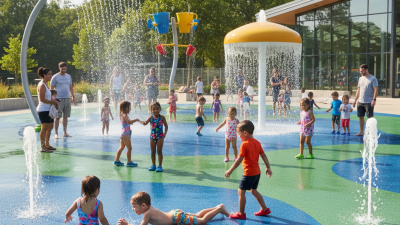
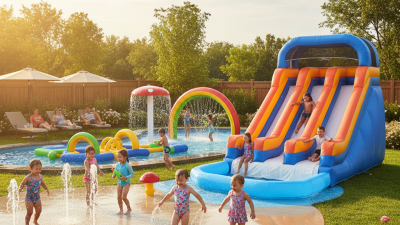
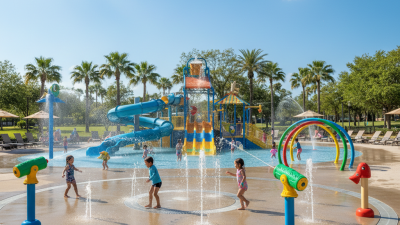
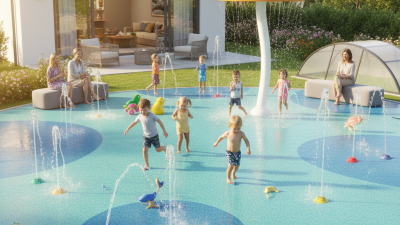
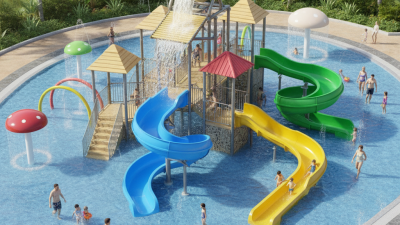
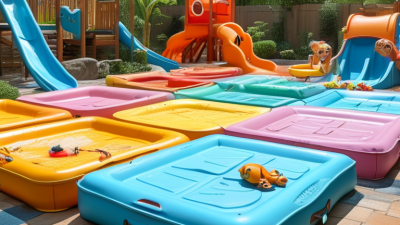
Picking out a kids’ Water Fountain? It’s not just about bright colors and fun sprays. There’s a lot more going on—safety, hygiene, durability, accessibility, and, of course, day-to-day maintenance. A well-designedPlaying Children Water Fountain should actually fit the kids’ ages, the space you’ve got, how much water it needs, and how much supervision you’ll be able to give.
Michael Chen works as a children’s water-play equipment consultant at BlueWave Recreation. As he puts it, “The best fountain is safe, easy to maintain, and inviting—without overstimulating kids.” Honestly, that matches what he’s seen on the job. A feature can look amazing and still be a letdown if the floor gets slippery, the spray height is off, or the filters need attention all the time.
When you're checking out the materials they use, really look closely. Smooth, non-toxic surfaces? Way easier to wipe down, and they don't hold onto dirt as much. And if kids are gonna be running around, rounded edges are a big deal. It's also smart to test how fast water drains after you simulate a play session. Those little puddles might not look like much, but trust me, they can turn into maintenance headaches and slipping hazards.
Water quality is another thing you’ll want to look at closely. I’d ask about filtration, disinfection, how refills work, and how easy it is to get in there for cleaning. Also, check that the manufacturer gives you clear docs and maintenance instructions—you don’t want to be guessing later. And keep in mind, local safety rules can vary, so getting advice from a professional installer is still a smart move.
Age range? Yeah, that changes everything. With toddlers, you're probably looking at gentler Ground Sprays and shallow water—nothing too intense. Older kids, though, tend to go for interactive jets, buttons, timed effects, stuff like that. And accessibility really shouldn't be an afterthought. Every child deserves a fair way to join in.
No fountain's ever perfect, really. Even folks who've bought plenty of them can miss stuff like noise, shade, or how much work it puts on staff. If you can, go see one that's already installed. Just stand there and watch the spray patterns for a bit. And pay attention to where kids gather, where they hesitate, where they slip. Those little things? They usually tell you more than any glossy brochure ever will.
Define the Fountain’s Age Range Using ASTM F2373 and F1487
Choosing a kids Water Play fountain starts with a clear age decision, not colorful panels or strong spray. ASTM F2373 covers public-use play equipment intended for children from six months through 23 months. ASTM F1487 addresses public playground equipment for children ages two through 12. These standards help designers assess foreseeable use, entrapment, falls, edges, and structural safety. They are not interchangeable labels.
For a toddler zone, examine low outlets, gentle flow, reachable controls, and stable standing surfaces. A child may crawl, sit, or pull up beside the feature. For older children, consider running starts, climbing, jumping, and water-slick movement. The equipment’s documented age range should match the selected standard and the actual layout. Ask for compliance records, installation instructions, inspection guidance, and evidence that the surfacing suits the fall risk. Do not rely on the word “safe” alone.
The phrase Children Playing Facilities can describe many products, but age boundaries still matter. A mixed-age fountain needs separation, visibility, and controls that younger users cannot easily misuse. Water depth, drainage, hygiene, slip resistance, and supervision also require review under local requirements. ASTM standards do not replace those checks. A practical mistake is choosing one age range for the whole site. I would recheck it after observing real play; children rarely follow the intended route. That observation may expose a blind corner, a fast discharge, or a surface that becomes unexpectedly slick.
How to Choose a Kids Water Play Fountain?
Define the fountain’s intended age range before selecting its height, water controls, flow features, and surfacing. ASTM F2373 covers public-use play equipment for children from 6 through 23 months, while ASTM F1487 covers public-use playground equipment intended for children from 2 through 12 years. These age ranges help guide design decisions, but the applicable standard edition, local regulations, supervision requirements, and site conditions should also be reviewed.
Prioritize Supervision and Safety Using CDC Drowning Data for Ages 1–4
Choosing a kids’ water play fountain starts with supervision, not color, spray height, or entertainment value. The CDC reports that drowning is the leading cause of unintentional death for children ages 1–4. Most drownings in this age group happen in swimming pools. A fountain is not automatically safer because it looks shallow.
Watch Kids Playing In Water Park areas from close range. Stay within arm’s reach of toddlers, especially near basins, drains, or slippery surfaces. Avoid phones and other distractions. The American Academy of Pediatrics recommends constant, attentive supervision around water. One adult should have a clear responsibility for each child. Shared attention often fails.
Choose a fountain with shallow, visible water and strong slip resistance. Check whether the drainage system prevents standing water and entrapment hazards. The U.S. Consumer Product Safety Commission emphasizes barriers, alarms, and safer pool environments, but supervision remains essential. Look for rounded edges, stable footing, and water flow that does not overpower a small child. Test the surface with wet shoes, if possible. It may still be too slick. That is easy to miss.
Install the fountain away from blind corners and crowded walkways. Keep a charged phone nearby, but not in your hand. Learn basic water-rescue and CPR skills through qualified training. CDC data can guide the purchase, but daily behavior determines much of the risk. A colorful design may attract children. It does not protect them.
How to Choose a Kids Water Play Fountain? - Prioritize Supervision and Safety Using CDC Drowning Data for Ages 1–4
Safety-focused selection guide based on CDC drowning-prevention information and child water-play supervision principles.
| Safety Dimension | Relevant Data or Evidence | What to Look for in a Fountain | Recommended Caregiver Action |
| Age-related drowning risk | Drowning is the leading cause of death for children ages 1–4, according to the CDC. | Choose a design that allows the supervising adult to maintain a clear view of every child at all times. | Treat water play as active supervision time, not as an activity children can safely manage alone. |
| Pool-like water exposure | For children ages 1–4, most fatal and nonfatal drowning incidents occur in swimming pools, according to CDC data. | Prefer a splash-style fountain with minimal standing water and no deep basin, reservoir, or pool-like collection area. | Empty or drain any water-collection area immediately after use and prevent access when the fountain is unattended. |
| Constant, close supervision | The CDC states that drowning can happen quickly and quietly, often without splashing or calling for help. | Select an open layout without tall panels, blind corners, opaque covers, or visual obstructions. | Assign one attentive adult to watch the water area without phone use, reading, or other distractions. |
| Barriers and access control | The CDC recommends preventing access to water when children are not supervised; barriers can help reduce unintended water entry. | Look for a controllable water supply, a secure shut-off method, and a setup that can be blocked or stored safely. | Turn off the water and restrict access whenever the supervising adult leaves the area. |
| Slip and fall prevention | Wet surfaces can create fall hazards around water-play equipment, even when there is no deep water. | Choose slip-resistant, stable flooring and a fountain with controlled spray pressure and effective drainage. | Keep the surrounding surface free of toys and debris, and stop play if the area becomes excessively slippery. |
| Drain and suction hazards | Open drains, exposed suction points, and loose covers can create entrapment or injury hazards in water environments. | Use equipment with protected drains, securely fitted covers, and no accessible suction openings. | Inspect drains, grates, hoses, and covers before every use; discontinue use if any part is damaged or loose. |
| Swimming and water-survival skills | The CDC identifies formal swimming lessons as one layer of protection that may reduce drowning risk for children. | Do not treat a fountain as a substitute for swimming instruction or water-survival training. | Consider age-appropriate, formally taught swimming and water-safety lessons while continuing direct supervision. |
| Emergency readiness | The CDC recommends learning basic water rescue, CPR, and ensuring emergency response equipment is available. | Choose a location with a visible emergency-access route and keep rescue and communication equipment nearby. | Adults supervising should know how to call emergency services and ideally have CPR and basic water-rescue training. |
| Water hygiene and maintenance | Standing or recirculated water can become contaminated if the system is not properly cleaned and maintained. | Select a fountain that is easy to drain, clean, inspect, and maintain according to its operating instructions. | Follow the maintenance schedule, remove visible debris, and do not allow children to play in water that appears dirty or stagnant. |
Safety priority: A kids water-play fountain should be selected as a supervised play environment. No product feature replaces direct, attentive adult supervision.
Check Water Quality Features Against CDC Model Aquatic Health Guidance
How to Choose a Kids Water Play Fountain?
Water quality should guide your fountain choice, not colorful spray patterns. The CDC Model Aquatic Health Code offers a useful benchmark for evaluating aquatic venues. Look for continuous circulation, effective filtration, and easy access to drain covers. Recirculated water should move through treatment equipment often enough to limit dirt, skin oils, and microbes. A clear basin is not proof of safe water.
Check whether the system monitors disinfectant levels and pH. Digital sensors can provide frequent readings, while manual test logs show whether staff actually verify performance. Ask for the target ranges, testing schedule, and response plan after vomiting, fecal contamination, or equipment failure. The exact requirements may depend on local rules and fountain design. Still, vague answers deserve caution.
Look for secondary treatment, such as ultraviolet support, when the design allows it. Confirm that spray nozzles, splash surfaces, and collection tanks can be cleaned without hidden corners. During an inspection, notice slippery flooring, standing water, blocked drains, or a strong chemical smell. Small details matter. I would also ask how quickly the fountain closes when readings fall outside safe limits. A perfect-looking installation can still have weak records. Guidance helps, but regular maintenance decides whether that guidance works in real life.
Verify Materials and Components Under NSF/ANSI/CAN 50 Requirements
Choosing a kids’ water play fountain requires more than bright colors and strong spray. Verify every wetted material and component against NSF/ANSI/CAN 50 requirements, when the product falls within the standard’s scope. This standard addresses equipment and materials used in swimming pools, spas, splash areas, and other recreational water facilities. Ask for the exact certification, covered model, and current test documentation. Do not accept a generic “food grade” claim.
Look closely at nozzles, drains, valves, fasteners, seals, and internal tubing. Stainless steel may resist corrosion, but its grade and surrounding metals still matter. Plastic parts should be suitable for continuous water exposure, cleaning chemicals, sunlight, and repeated temperature changes. Inspect one unit physically. A hidden gasket can matter more than a polished housing. I have seen specifications that sounded complete but omitted replacement components. That gap deserves questioning.
The CDC reported 208 recreational-water outbreaks from 2015 through 2019, causing at least 3,646 illnesses, 286 hospitalizations, and 13 deaths. Its Model Aquatic Health Code also emphasizes water quality, circulation, disinfection, and facility design. NSF/ANSI/CAN 50 verification cannot replace proper operation, but it supports safer material selection. Request test reports from an accredited body, installation instructions, and maintenance intervals. Check whether the certificate covers the complete fountain assembly, not only one nozzle. Small details are easy to miss. That is where careful review can fail.
Match Flow Rate, Spray Height, and Drainage to Site Conditions
How to Choose a Kids Water Play Fountain?
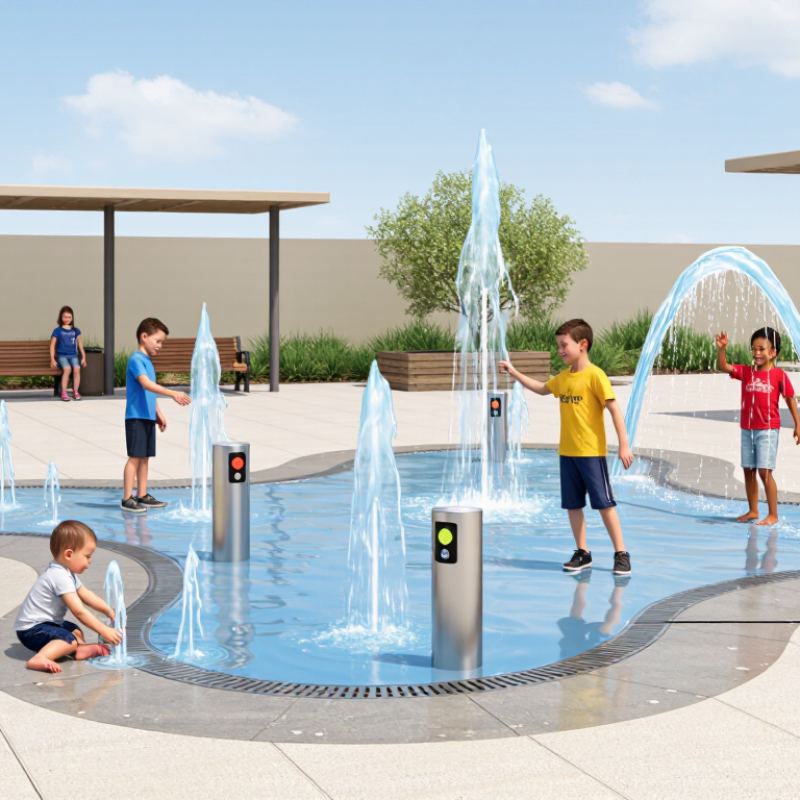
Flow rate should match the play area, pump capacity, and expected child density. A high flow rate can create exciting movement, but it may overwhelm shallow collection channels. Begin with each nozzle’s tested litres-per-minute figure, not the pump’s headline capacity. Water Park Fountain Equipment should allow separate valve control for quieter zones and active spray features. My first estimate is rarely final. A short on-site test often reveals uneven spray patterns.
Spray height must respond to wind, shade, and nearby walking routes. Tall jets look attractive, but wind can carry water onto slippery paving or seating. Lower sprays usually suit compact areas with young children. ASTM F2461 provides guidance for aquatic play equipment design, operation, and maintenance. Its principles support testing spray behavior under real conditions, not only in factory settings. Leave space around impact zones. Small details matter.
Drainage deserves equal attention. The CDC’s 2023 Model Aquatic Health Code emphasizes continuous treatment and circulation for interactive water venues. CDC surveillance recorded 208 treated recreational-water outbreaks, 2,195 illnesses, and 87 hospitalizations from 2015 to 2019. Poor drainage can extend contamination risks and create standing water. A practical design often uses a gentle 1–2% surface fall toward protected drains, subject to local engineering rules. I would still check puddling after a busy test session. Forecasts can be wrong. Children do not move like flow diagrams.
Evaluate Accessibility Using ADA Standards, Including 1:12 Ramp Slopes
When selecting a Water Playground Fountain, evaluate the entire accessible route, not only the spray equipment. The CDC’s Disability and Health Data System reports that 28.7% of U.S. adults have a disability. That figure makes inclusive planning a practical requirement, not a decorative feature. Under the 2010 ADA Standards, an accessible ramp should not exceed a 1:12 slope. Every inch of vertical rise requires at least 12 inches of horizontal travel.
Keep ramp runs clear, stable, and slip resistant. ADA guidance generally requires a 36-inch minimum clear width for accessible routes, while ramp landings should provide a level area at the top and bottom. Handrails are typically required when a ramp rises more than 6 inches. Near the fountain, avoid raised edges and sudden surface changes. Wet tiles can become difficult for wheelchairs and walkers.
A compliant drawing can still feel awkward. I would test the route with a wheelchair, mobility cane, and stroller before construction. Watch for spray patterns crossing the ramp. Check whether a child can reach the controls without leaning into moving water. The U.S. Access Board identifies maneuvering space and surface stability as key accessibility concerns. Local requirements may be stricter than federal standards. Verify them early. Small details matter.
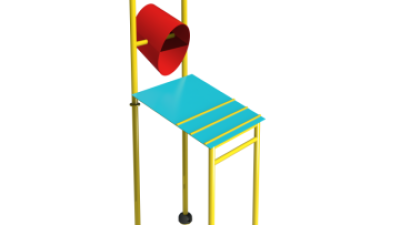
Children’s Water-Spraying Play Buckets: A Fun Guide to Splash-Time Adventures
Children’s water-spraying play buckets turn ordinary outdoor time into an exciting splash-time adventure. Designed for sunny gardens, patios, and poolside play, these colorful buckets let children fill, aim, and spray water in playful new ways. Bright patterns and cheerful designs capture their attention, while the easy-to-use shape encourages active movement, imaginative games, and friendly water challenges with family or friends.
A wider spraying range adds extra excitement, allowing kids to reach farther targets and create lively splash games. They can invent missions, practice aiming at floating toys, or enjoy a refreshing water battle on warm days. The bucket is made to be durable enough for energetic play, helping it handle frequent filling, carrying, and splashing without easily losing its shape.
With engaging colors, sturdy construction, and a fun water-spraying feature, this play bucket keeps children entertained for hours. Adults can set up simple outdoor games, provide a safe play area, and supervise children as they explore their own splash-time adventures.
Conclusion
Choosing a Playing Children Water Fountain requires more than selecting an attractive design. First, define the suitable age range by considering the safety principles of ASTM F2373 and ASTM F1487. Because children ages 1–4 require especially close supervision around water, the layout should support clear visibility, controlled access, non-slip surfaces, and safe supervision. Water quality features should also be reviewed against CDC Model Aquatic Health guidance, including effective filtration, disinfection, circulation, and maintenance procedures.
The fountain’s materials, pumps, drains, and other components should meet applicable NSF/ANSI/CAN 50 requirements for aquatic equipment. Site conditions should determine the appropriate flow rate, spray height, splash area, and drainage capacity to reduce standing water and slippery surfaces. Finally, accessibility should be included from the beginning by following ADA principles, such as providing routes with ramp slopes no steeper than 1:12 where ramps are required. A well-planned fountain balances play value, hygiene, accessibility, durability, and age-appropriate safety.