When you think about China's supply chain for swing-set parts, it’s not just about the frames and slides. It actually includes all sorts of little components like chains, seats, hangers, brackets, anchors, caps, and replacement hardware. And honestly, those tiny parts can have a big impact—affecting how everything fits together, moves, and even how easy it is to keep everything in good shape. When you're shopping around and comparing different manufacturers, don’t just look at the price tags. Make sure to check out the material specs, how well they protect against rust and corrosion, whether the dimensions match up, load capacities, and what quality checks they’ve documented. Trust me, just because it looks good in a catalog doesn't mean it’s the right fit.
To get a clearer picture, it helps to look at industry resources. For example, the U.S. Consumer Product Safety Commission’s NEISS database tracks injury reports, and their Playground Safety Handbook points out common hazards like falls, entrapments, and how equipment should be laid out safely. There’s also ASTM’s safety standards (like ASTM F1148), which are super useful for technical details. But keep in mind—they don’t automatically certify every part or supplier. That’s an important point. Market research reports, like the ones from Grand View Research on playground equipment, can give you a sense of where the industry’s headed, but they can’t verify what a particular factory claims about their production.
This guide focuses on the top 10 Chinese manufacturers but keeps things practical. Ask yourself questions like: What materials are they really using? Are replacement parts straightforward to identify? Can the supplier provide clear drawings and testing reports? For example, a chain link might look solid in a picture, but it’s worth checking the finish, dimensions, and how it connects properly. No matter who you’re considering, don’t skip the diligence. Picking the right Swing Set Parts And Accessories supplier means finding one that offers clear specifications, reliable communication, and realistic after-sales support. That’s the real key to making a smart choice in the long run.
Swing Set Parts and accessories manufacturing in China often brings metalworking, plastics, and assembly under one supply network. Factories may produce swing hangers, chains, seats, brackets, and fasteners, while coordinating surface finishing and packaging. That range can simplify sourcing. Still, supplier capabilities vary; a polished sample does not prove consistent production.
Buyers should review material specifications, load-test records, corrosion checks, and inspection plans before approving an order. For outdoor steel parts, weld consistency and coating coverage matter around edges and drilled holes. Plastic seats need clear information about resin type, UV exposure, and temperature performance. Ask how defects are recorded and corrected, not only how many units pass. Details matter.
Backyard Swing Set Accessories may need to fit different frame sizes, climates, and installation methods. A useful factory discussion covers drawings, tolerances, packaging tests, replacement-part availability, and realistic lead times. Small changes can affect assembly. Buyers sometimes overlook carton damage or unclear instructions until a shipment reaches installers. That gap deserves attention: production data helps, but feedback from actual use remains important.
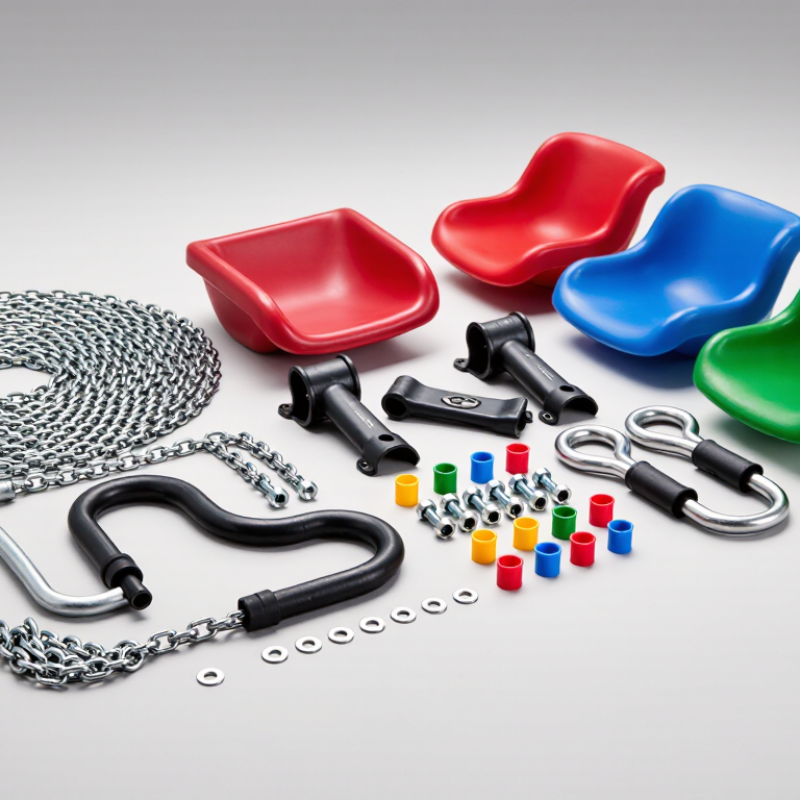
Common swing-set parts and accessories include seats, suspension chains or ropes, hangers, connectors, ground anchors, and protective caps. Seats may be flat, belt-style, or bucket-shaped for younger users. Chains need smooth links and compatible hangers; rough edges can catch clothing or pinch fingers. Small parts matter. Check the rated load, material, dimensions, and mounting method before selecting replacements. Galvanized or stainless-steel hardware can help resist outdoor corrosion, but finishes and exposure conditions vary.
The U.S. Consumer Product Safety Commission’s Public Playground Safety Handbook reports an estimated 200,000 emergency-room-treated injuries related to playground equipment annually, based on 1999 data. This is historical, not a current forecast, but it shows why sound assembly deserves attention. ASTM F1148, the consumer safety performance specification for home playground equipment, is another useful technical reference when assessing equipment design. Buyers comparing manufacturers can ask for material specifications, load-test documentation, and clear installation instructions. One detail is easy to miss: anchors and fasteners may be sold separately, so confirm the complete hardware set before installation. Product catalogs group accessories differently, too. That can make comparisons less straightforward.
Swing-set component quality is shaped by repeatable manufacturing, not just a sturdy-looking frame. Capable factories cut and bend steel tubing to controlled dimensions, then fixture and weld joints to limit alignment errors. Seats may be molded from impact-resistant polymers, while chains and connectors need consistent dimensions and smooth, snag-free finishes. Powder coating can add corrosion protection, but only when surface preparation and coating thickness are controlled. Small details matter: a rough weld can catch a sleeve, and a loose connector can create movement where none is intended.
The U.S. Consumer Product Safety Commission’s analysis of 2001–2008 NEISS data estimated about 218,000 emergency-department-treated injuries annually involving playground equipment among children under 18. This figure covers playground equipment broadly, not swing sets alone. It reinforces the value of documented load checks, weld inspections, dimensional sampling, and batch traceability. Buyers can ask for test methods, inspection records, and material specifications rather than relying on a general claim of “heavy duty.” ASTM F1148 provides a relevant reference for home playground equipment, though a standard reference is not proof that a product has been tested or certified.
Tips: Request close-up photos of welds, coating edges, and chain links, plus written load-test results. Check how suppliers handle failed samples. That part is easy to overlook.
| Product Category | Common Materials | Typical Manufacturing Processes | Product Capabilities | Key Quality Checks | Relevant Safety Considerations |
|---|---|---|---|---|---|
| Swing seats | UV-stabilized polyethylene, polypropylene, rubber, or coated metal, depending on seat design | Injection molding, rotational molding, rubber molding, or metal forming | Flat, bucket, toddler, and flexible seat designs; molded surfaces and attachment points can be incorporated into the design | Visual inspection, dimensional checks, attachment-point inspection, and material or load testing as specified | Check for secure suspension points, smooth edges, suitable seat geometry, and age-appropriate use |
| Swing chains | Galvanized or stainless steel; some designs use polymer-coated chain sections | Wire drawing, link forming, welding, heat treatment where specified, surface finishing, and coating | Different link sizes and lengths; compatible end fittings can be supplied for defined swing-seat and hanger interfaces | Link dimensions, weld inspection, corrosion-finish checks, and tensile or proof-load testing to the applicable specification | Inspect for broken links, sharp edges, corrosion, entrapment risks, and secure end connections |
| Rope and belt suspension assemblies | Polyester, polypropylene, or other specified synthetic fibers; coated metal inserts may be used in some constructions | Fiber extrusion, twisting or braiding, cutting, end termination, stitching, and assembly | Adjustable lengths and multiple rope or belt constructions, subject to the intended load and connection design | Rope diameter, splice or stitching integrity, end-fitting retention, abrasion condition, and specified strength tests | Assess wear, UV exposure, fraying, connection security, and openings that could create entrapment hazards |
| Swing hangers and bearings | Steel or stainless steel housings with polymer or metal bearing elements | Stamping, machining, forging or casting for selected designs, welding, assembly, and surface treatment | Hanger styles for compatible beams and suspension connections; designs may use bushings or bearings to support movement | Hole spacing, thread and fit checks, movement testing, corrosion inspection, and load testing to the design specification | Confirm correct mounting hardware, free movement, secure retention, and compatibility with the supporting structure |
| Carabiners, shackles, and connecting links | Steel, stainless steel, or other specified metals; some products include locking features | Wire forming, forging or machining, heat treatment where required, finishing, and assembly | Connection options with different gate, pin, or locking arrangements for specified system interfaces | Dimensional and closure checks, thread inspection where applicable, material traceability, and specified load testing | Use only connectors intended for the application; check closure, locking, wear, deformation, and compatibility |
| Beam brackets and mounting plates | Carbon steel, galvanized steel, or stainless steel, selected for the application and environment | Laser cutting or stamping, bending, drilling, welding, deburring, and protective finishing | Custom hole patterns and mounting geometries can be produced to match defined beam and hanger interfaces | Hole position, plate thickness, weld quality, edge condition, coating coverage, and dimensional inspection | Bracket selection and installation should account for the support structure, fasteners, corrosion exposure, and intended loads |
| Ground anchors and post bases | Galvanized steel, stainless steel, or coated steel; concrete may be used as part of the installed foundation | Rod forming, plate fabrication, welding, machining, coating, and assembly | Earth-anchor, post-base, and embedded mounting configurations for compatible support systems | Weld and coating inspection, dimensional checks, thread checks, and verification against installation drawings | Anchor type and installation depend on soil, foundation design, site conditions, and the equipment manufacturer's instructions |
| Swing frames and support beams | Structural steel or appropriately specified timber; material choice depends on the frame design | Tube cutting, drilling, bending, welding, timber machining, assembly, and protective finishing | Single-bay or multi-bay frame components; beam dimensions and connection details are design-specific | Material and dimension checks, weld inspection, alignment, finish inspection, and structural testing where specified | Structural capacity depends on the complete installed system, including supports, connections, foundations, and site conditions |
| Protective caps, covers, and end plugs | Polyethylene, polypropylene, rubber, or other impact-resistant polymers suitable for the intended environment | Injection molding, compression molding, trimming, and fitting or assembly | Protective covers for selected tube ends, fasteners, and exposed connection areas; shapes are matched to host components | Fit and retention checks, dimensional inspection, surface inspection, and material verification | Check that covers remain secured and do not introduce sharp edges, pinch points, or accessible small parts |
| Fasteners and adjustment hardware | Carbon steel, stainless steel, or specified alloy steel; surface finishes may include zinc or other protective coatings | Cold heading, thread rolling, machining, heat treatment where required, coating, and sorting | Bolts, nuts, washers, pins, and adjustment elements in specified sizes and thread forms | Thread gauges, dimensional checks, coating inspection, hardness checks where specified, and lot identification | Fastener grade, installation torque, retention method, and inspection frequency should follow the equipment design and instructions |
The ten profiles compare Chinese manufacturers of swing-set parts through their product ranges, factory capabilities, and quality checks. They cover seats, chains, connectors, hangers, and replacement hardware. A useful profile goes beyond catalog photos. It explains material grades, load-test methods, and whether parts can be customized.
Grand View Research’s Playground Equipment Market Size, Share & Trends Analysis Report valued the global market at USD 6.3 billion in 2023. It forecasts 6.3% annual growth from 2024 to 2030. That estimate describes the wider market, not swing-set accessories alone.
Across the ten manufacturers, buyers can compare steel fabrication, plastic molding, finishing, and export experience. Check whether chains are coated, welds are smooth, and seat edges feel rounded. Ask for test records and clear dimensions, including tube diameter and metal thickness. These details matter when parts must fit an existing frame. Small measurements count.
The profiles also help identify suppliers offering Unique Swing Set Accessories, such as adjustable seats or weather-resistant connectors. Still, catalog claims are not proof of long-term performance. Some listings omit material thickness, making comparison imperfect. Request samples and inspect them under realistic conditions. A reliable supplier should explain test limits plainly, though not every profile will provide equally complete evidence.
For buyers comparing China’s top swing set parts and accessories manufacturers, safety begins with traceable materials and consistent production checks. Ask suppliers how they inspect welds, fasteners, coatings, and plastic parts—not just whether products pass a final review. A sound process records material batches, inspection results, and corrective actions. Test methods should match the intended use and destination market; one certificate rarely answers every question. Details matter.
Tips: Request load-test records and clear assembly instructions. Check that bolts fit snugly and exposed edges feel smooth. Confirm the Swing Set Accessories Kit includes compatible fittings, and ask how replacement parts are identified. Keep samples for comparison with later shipments.
Quality control should cover incoming materials, in-process measurements, and finished-product sampling. For example, inspectors can check tube dimensions, coating coverage, and connector alignment before packing. Packaging deserves attention too: loose metal parts can scratch finishes during transport. Photographs and dated inspection reports make supplier discussions more concrete. Still, a checklist can miss a problem, especially when production changes quickly. Buyers should agree on inspection criteria before an order and review them when designs or materials change.
When comparing Chinese manufacturers, assess the factory behind the catalog, not just its product photos. Ask for current specifications, material grades, and clear drawings for seats, chains, brackets, and fasteners. Request sample parts and inspect welds, smooth edges, hole alignment, and coating consistency under good light. Small details matter. Ask how load tests are recorded, which batches they cover, and whether reports match your exact design. A polished PDF helps, but it is not proof by itself.
For Swing Set Accessories, confirm compatibility with your frame dimensions and intended installation before discussing price. Ask about production capacity, lead times, packaging, spare parts, and written inspection criteria. If possible, arrange a factory visit or independent inspection to compare finished goods with approved samples. Check that material and test documents can be traced to the shipment. Keep the first order modest, with agreed acceptance points and a record of changes. Sourcing plans can focus too heavily on unit cost; I still find details get missed when drawings are vague. Evaluate the production team’s answers, not only the sales contact’s. A sample cannot guarantee every later batch.
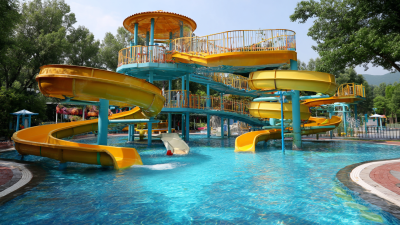
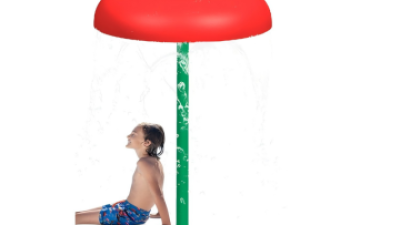
A mushroom splash pad adds a cool, playful focal point to Water Parks and pools. As water spills from the broad canopy, it creates a refreshing curtain for children to run through, pause beneath, and enjoy together. This simple, interactive feature encourages active play while offering a welcome way to cool off on warm days. Its inviting shape can also help turn an open splash area into a more engaging destination for families.
The Water MUSHROOM model TM-2178 is designed for this kind of lively aquatic setting. Measuring Ø180 × 270 cm, it is made from fiberglass and has a water flow rate of 25 m³/h. Its generous canopy helps spread water around the play area, creating a playful splash zone that can complement other pool or water-park features. Whether placed as a standalone attraction or among additional water-play elements, a mushroom splash pad brings movement, shade-like shelter, and refreshing fun to the experience.
Common parts include hangers, chains, seats, brackets, fasteners, and steel frames. Capabilities vary by factory.
Review material specifications, weld inspection records, dimensions, and load-test results. Ask for close-up photos of welds and drilled holes.
Look for even coating around edges, joints, and holes. Ask how the factory checks corrosion resistance.
Request the resin type and performance details for sunlight and temperature exposure. A smooth seat is not the whole story.
No. Compare production inspection plans with sample quality, and ask how defects are recorded and corrected.
Share drawings, frame dimensions, and tolerance requirements. Confirm that connectors fit and instructions are clear.
Ask about carton testing and protection for chains, seats, and coated parts. Damaged boxes can turn into installer delays.
Request material specifications, load-test methods, inspection records, and batch traceability. A general “heavy duty” claim is not enough.
This article explores China’s Swing Set Parts And Accessories manufacturing sector, outlining the common components used in swing sets and the capabilities behind their production. It covers items such as seats, chains, ropes, connectors, hangers, and protective fittings, while explaining how manufacturers may use processes including metal forming, molding, welding, finishing, and assembly to meet different product requirements.
The article also profiles ten Chinese manufacturers and describes how to assess their product ranges, production capacity, customization options, and quality-control practices. It highlights the importance of checking material consistency, workmanship, testing procedures, and relevant safety standards when comparing suppliers. Practical sourcing considerations—including clear specifications, sample evaluation, communication, lead times, and inspection arrangements—help buyers make informed decisions and build reliable supplier relationships.