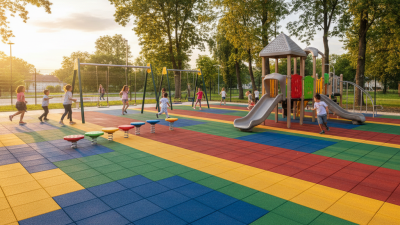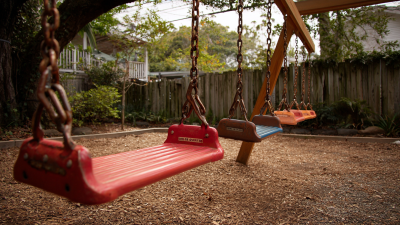
Let's be honest—picking a rubber tiles Outdoor Playground surface isn't just about which color looks best or what fits your budget. You've also got to think about fall protection, drainage, accessibility, and how it'll hold up to daily wear. Honestly, it's a lot to weigh. The U.S. Consumer Product Safety Commission's Public Playground Safety Handbook even mentions a historical estimate of around 200,000 playground-equipment injuries treated in the U.S. each year. That really puts things in perspective, doesn't it? Emergency departments are seeing that many people each year. Okay, that number isn’t a fresh annual count or anything, but it still makes a pretty strong case for why surfacing deserves a careful look.
And hey—play matters just as much. Dr. Stuart Brown, a psychiatrist who studies play, famously said, 'The opposite of play isn't work; it's depression.' He wasn't talking about rubber flooring, exactly, but that idea helps explain why a safe, inviting play space really matters. For these seven picks, we dug into the practical stuff: tile thickness, surface texture, edge transitions, weather exposure, and whether you can replace a damaged section without a huge headache. Honestly, ASTM F1292 gives you a recognized way to measure impact attenuation—but a standard by itself won't guarantee a safe install. The real work is in site prep and maintenance, and that still counts for everything.
Honestly, tile choice is one of those things you don't think about until you're standing on it. Some tiles feel nice and solid underfoot. Others have a bit of give, which can soften a fall, but they can also hold water if the drainage isn't thought through. It's the little things that get you. A slightly loose edge might catch someone's shoe. A shady corner can stay damp long after a rainstorm. So the right pick really depends on the playground itself—what equipment is there, what the climate's like, how kids actually use the space. A product photo won't tell you that. These guidelines are meant to help compare options more clearly, but honestly, no single tile is going to work for every site.
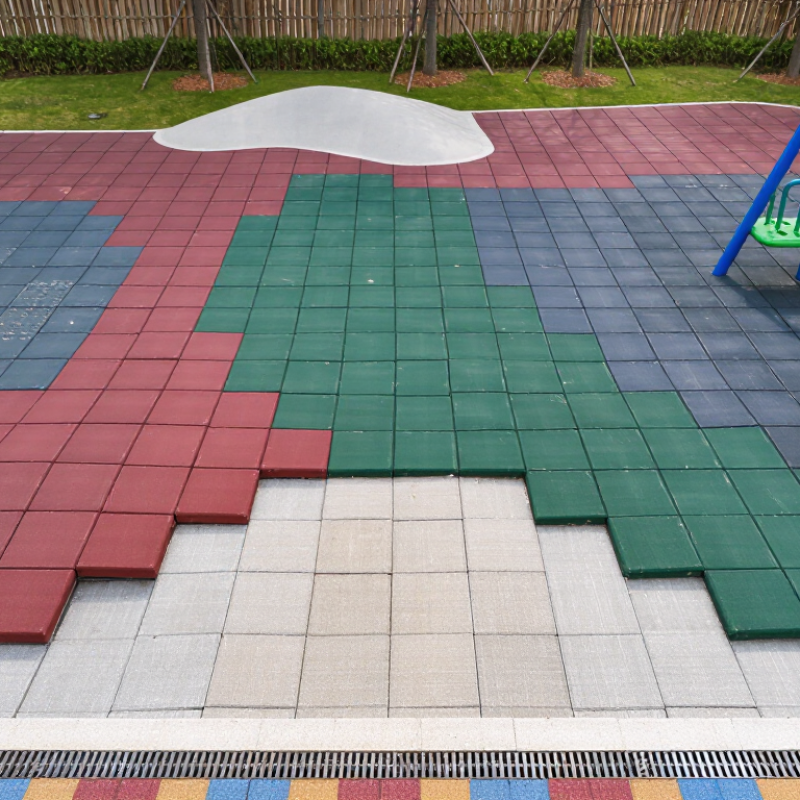
Understanding Rubber Tiles for Outdoor Playgrounds starts with knowing what they can—and cannot—do. These modular surfaces are made to cushion falls, create a more even play area, and provide traction underfoot. Rubber Tiles Playground options vary in thickness, density, drainage design, and edge shape. Those details matter. A tile that feels soft in a hand may not provide suitable protection beneath climbing equipment; check its tested impact performance against the equipment’s fall height.
Installation begins below the tiles. A stable, well-drained base helps limit shifting and standing water after rain. Interlocking edges can simplify placement, but seams still need checking, especially near swings and busy entrances. Small gaps may collect grit or widen with temperature changes. Not ideal. Follow the tile maker’s installation guidance, and have a qualified surfacing professional assess the site where fall protection is important.
Outdoor conditions shape long-term performance. Sun exposure can heat dark surfaces, while freeze-thaw cycles may loosen poorly supported sections. Sweep away leaves and inspect edges, joints, and worn spots regularly. I would not assume every rubber tile drains equally well; water can linger if the base is uneven or blocked. Ask for test documentation, confirm maintenance needs, and compare the product’s intended use with the playground’s layout before choosing.
Choosing Playground Rubber Tiles means judging more than softness underfoot. Check the product’s tested critical fall height against the highest accessible play surface. Tile thickness matters, but it does not prove protection on its own. The base beneath the tiles also affects impact performance. Small details count.
A practical inspection should include seams, edges, and drainage. Look for gaps where a child’s shoe could catch, raised corners, or water that pools after rain. Ask for test documentation showing the surface’s impact performance at the intended installation depth. Match the results to the equipment’s fall height, rather than relying on a general safety claim. I’d also inspect a sample after a wet day; surfaces can feel different when damp.
Thicker tiles may suit higher-impact areas, yet they can cost more and require careful edge transitions. Thin tiles may work in lower-risk zones, but only when test data supports that use. There is no single thickness that fits every playground. That is easy to overlook. Installation quality, sub-base preparation, and regular checks all matter. Even a well-tested surface can develop loose seams or worn spots, so plan inspections and repairs from the start.
Comparing Seven Types of Outdoor Rubber Tiles
Choosing Playground Outdoor Tiles is not just a color decision. The U.S. Consumer Product Safety Commission’s Public Playground Safety Handbook reports that falls account for about 79% of playground-equipment injuries treated in emergency departments. It also cites an estimate of roughly 200,000 such visits each year. These are older estimates, not a current annual count, but they underline why impact performance matters.
Seven common configurations suit different sites: solid SBR tiles are practical and usually economical; solid EPDM tiles offer more color choices; capped recycled-rubber tiles combine a resilient base with a colored wear layer. Interlocking tiles can simplify replacement, while perforated drainage tiles help water move through the surface. Beveled-edge tiles reduce abrupt edges, and color-through molded tiles keep their appearance when scuffed. Details vary by manufacturer, so these categories are not guarantees of equal performance.
Check each product’s tested critical fall height against the equipment’s fall height. ASTM F1292 specifies impact-attenuation testing; ask for test documentation for the installed thickness and system, not just a sample tile. Also inspect the base, seams, drainage, and edges. A tile that feels soft underfoot can still fail to protect from a fall. That is easy to overlook. Real sites add complications: shade, muddy edges, and heavy foot traffic can change maintenance needs. I would not assume one tile type fits every playground.
Comparing seven common outdoor rubber tile types by general-purpose playground suitability.
Scores are qualitative editorial ratings from 1 (lower) to 5 (higher), based on typical construction characteristics—not laboratory test results or a ranking of specific products. Actual impact protection, drainage, durability, and suitability depend on tile specifications, installation, and site conditions. Verify critical fall-height requirements against tested product documentation.
A playground surface should shed water quickly, not leave shallow puddles around swings and slides. When comparing a Rubber Mat Outdoor Playground option, check whether water can pass through the tile and drain from the base below. Perforations help, but they cannot fix compacted soil or a poorly graded foundation. That matters after storms. Look for stable, even edges where tiles meet, since standing water can make seams harder to inspect.
Weather resistance takes more than a claim on the product sheet. Ask how the material handles strong sun, repeated wetting, and freeze-thaw cycles. UV exposure may fade color, while temperature changes can affect fit. A sample left outdoors for a few weeks can reveal changes that a showroom display cannot. It is easy to overrate appearance.
Durability depends on material quality, thickness, installation, and daily use. Check whether high-traffic spots can be replaced without lifting a large area. Press and inspect sample tiles for crumbling edges or loose granules, then review the maker’s care instructions. A very thick tile is not automatically the better choice; it still needs a suitable base and secure joins. I would also revisit drainage after the first heavy rain. Small issues show up then.
Planning matters more than color. Before choosing rubber tiles, measure the equipment’s fall height and check the manufacturer’s tested critical fall height for the proposed tile thickness. The U.S. Consumer Product Safety Commission’s Public Playground Safety Handbook identifies falls as a major source of playground injuries and recommends protective surfacing beneath and around equipment. ASTM F1292 provides a recognized method for assessing impact attenuation. Ask for test documentation, not just a product description.
Installation needs a firm, well-drained base. Remove soft soil, compact the sub-base, and keep tile joints tight; even a small lifted edge can catch a shoe or wheelchair caster. Allow for drainage and follow the supplier’s instructions for temperature, adhesive, and perimeter restraint. Check transitions at paths and borders. They are easy to overlook.
Maintenance should include a quick visual inspection each week and a closer check after storms, heavy use, or freeze-thaw cycles. Look for loose corners, open seams, standing water, and crushed or brittle surfaces. Record repairs and dates. Replace damaged tiles promptly, but do not assume one new tile restores the original tested performance. Color can mislead. A clean surface may still have weakened cushioning, and a worn patch may call for professional assessment rather than guesswork.
Choosing a tile begins with the playground’s fall height, not its color. Measure twice. CPSC’s 2010 Public Playground Safety Handbook estimated that, in 2009, about 200,000 children received emergency-room treatment for injuries involving public playground equipment. That figure is dated, but it shows why impact protection deserves careful attention. Choose a tile system with documented critical fall height tested under ASTM F1292, matched to the tallest equipment’s fall height. A thicker tile is not automatically safer if its test rating does not fit the site.
Drainage, climate, traffic, and access matter too. Check how water leaves the surface after a heavy shower; trapped moisture can complicate maintenance and contribute to unevenness. For accessible routes, ask for test documentation against ASTM F1951, which evaluates surface accessibility. Inspect tile edges and seams, especially where children run or mobility devices turn. Small gaps matter. Compare sample tiles in direct sun, and confirm the proposed base is level and suitable for the site. One detail is easy to miss: a good tile cannot compensate for poor installation or neglected inspections. It’s worth checking those assumptions before choosing.
| Tile type | Typical thickness options | Best suited for | Key advantages | Trade-offs and checks |
|---|---|---|---|---|
| 1. Recycled SBR rubber tile | About 1–2 in (25–50 mm), depending on product | General play areas and projects prioritizing a practical, resilient surface | Uses recycled rubber; resilient underfoot; commonly available in multiple thicknesses | Color and UV performance vary. Confirm drainage, binder, and tested impact performance for the intended installation. |
| 2. EPDM wear-layer tile with rubber base | Often about 1–2.5 in (25–64 mm) | Playgrounds needing a colored, weather-exposed top surface | Colored EPDM granules form the wear layer; the rubber base provides cushioning | Construction and layer thickness differ by product. Check colorfastness, seam details, and the complete system’s test documentation. |
| 3. Full-depth EPDM tile | Commonly about 1–2 in (25–50 mm) | Areas where consistent color through the tile is a priority | Color extends through the material rather than being limited to a thin top layer; available in assorted colors | Do not assume that material type alone indicates impact attenuation or UV life. Compare product-specific test and warranty information. |
| 4. Fine-granule, dense rubber tile | Often about 1–2 in (25–50 mm) | Busy areas where a compact, even surface is desired | A finer surface texture can provide a more uniform finish than coarse-granule products | Surface texture, slip resistance, and drainage are product-specific. Inspect a sample and confirm suitability for the site conditions. |
| 5. Permeable or drainage-focused rubber tile | Varies; commonly around 1–2 in (25–50 mm) | Outdoor sites where water needs to pass through or move away from the surface | Open structure or drainage features may help reduce standing water when paired with a suitable base | Tile permeability alone does not ensure drainage. The underlying base, slope, and outlets must also be designed for water flow. |
| 6. Interlocking rubber tile | Often about 1–2 in (25–50 mm) | Projects that value modular replacement or a mechanically joined layout | Individual units can be replaced; interlocking edges can help align tiles | Requires a stable, appropriately prepared base. Check connection strength, perimeter restraint, trip hazards, and whether the installed system has relevant test data. |
| 7. Thick impact-attenuating rubber tile | Often about 2–4 in (50–100 mm); offerings vary | Play equipment areas where a greater tested critical fall height may be required | Greater thickness may provide additional cushioning when the complete product system is designed and tested for it | Thickness does not establish a safe fall height by itself. Match documented critical fall height to equipment height, substrate, and installation requirements. |
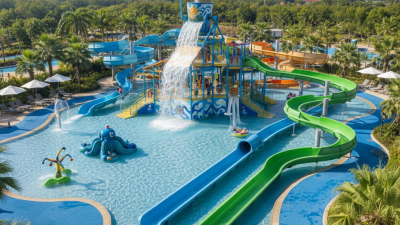
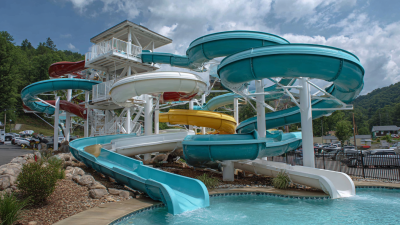
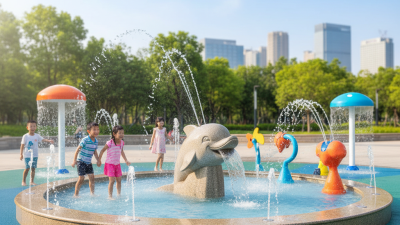
Outdoor Water Play can be joyful, but choosing a slide should go hand in hand with planning for safety. The U.S. Consumer Product Safety Commission’s *2024 Pool or Spa Submersion Report* estimates that an average of 6,300 children under 15 were treated in emergency departments each year for pool- or spa-related, nonfatal drowning injuries during 2021–2023. This figure covers pool and spa incidents—not slide injuries—but it underscores why active adult supervision matters whenever children are playing in or near water. A slide is an addition to supervised play, never a substitute for it.
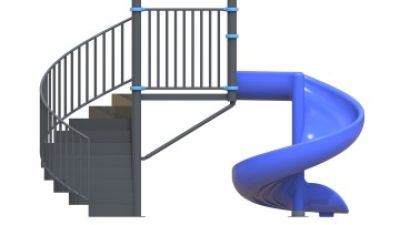
A well-designed play area can combine excitement with sturdy construction. This children’s water play area features a durable stainless steel platform and a high-quality fiberglass slide, built for reliable enjoyment through repeated use. The lively design invites children to take turns and enjoy a thrilling ride, while caregivers can check that the platform is stable, the slide is securely installed, and the landing area is clear before play begins.
Set clear rules: one child on the slide at a time, feet-first sliding, and no pushing or diving. Match use to the manufacturer’s age, size, and setup guidance, and keep an attentive adult within reach. Regularly inspect the platform, slide, connections, and surrounding surface for damage or hazards; pause play if anything needs attention.
Match the tested critical fall height to the highest accessible play surface. Thickness alone does not prove protection. The base matters too.
Ask for impact-test documentation for the installed thickness and full surface system. Check that its rating matches the equipment’s fall height. A soft feel is not enough.
Yes. An uneven or poorly prepared base can affect the finished surface. Confirm the base is suitable and level before installation.
Options include solid rubber, colored wear-layer, interlocking, perforated drainage, beveled-edge, and color-through tiles. Their performance can vary. The category alone is not a safety rating.
Look for puddles after rain, gaps between tiles, and raised corners. Small gaps matter. Check the edges where children run or mobility devices turn.
Ask for accessibility test documentation for the proposed surface. Also check transitions, seams, and turning areas. I might overlook these details when focusing on impact ratings.
Plan regular checks for loose seams, worn spots, and damaged edges. Inspect after heavy use or severe weather. Repair issues before they spread.
No. A thicker tile may suit a higher-impact area, but its test results must fit the site. I would recheck that assumption after reviewing the equipment height.
Color can help the playground look coordinated, but it should not lead the choice. Compare samples in direct sun, then check drainage, test results, and installation needs.
Choosing the right Rubber Tiles Outdoor Playground surface starts with understanding how rubber tiles provide cushioning, traction, and a more comfortable area for active play. Compare tile types by considering safety, thickness, and impact protection, while matching the surface to the playground’s equipment and expected use. The appropriate level of cushioning depends on factors such as fall height and the condition of the underlying ground.
A durable playground surface should also manage rain effectively and withstand sun, temperature changes, and regular use. Before selecting tiles, consider how they will be installed, how often they may need cleaning or inspection, and whether individual pieces can be replaced when worn or damaged. By weighing these practical factors alongside safety and performance, you can choose an outdoor tile solution suited to your space, climate, maintenance routine, and long-term playground needs.